
Think about a student getting ready to walk into their school’s classroom today. What are they thinking about? What body language do you picture?
The visual that comes to mind for me is a fifth-grade student, backpack on, getting stuck in the doorway, unable to fully enter the room. Why are they stuck? Their head, filled with so much stuff—social media, testing, overscheduling, and a 24-hour news cycle—is figuratively too big to enter the classroom.

After they squeeze through and their body comes to sit down at the desk, their preoccupied head disconnects and slowly floats away from the present classroom moment. They do not feel ready to learn. With “reality” taking up so much space in our students’ heads, the image below illustrates what the modern classroom often feels like, with a palpable disconnect between the mind and body.
This disconnect affects everything from the school climate to future outcomes and is happening nationwide. From math class to art class, from rural schools to urban districts, from our youngest learners to our eldest graduates, students don’t feel present and available to learn. Movement can help solve many of these problems.
Moving the Body, Moves the Mind
We are built to move. We are hardwired to react physically to stimuli, experiences, and people. Movement in any form is an organic and instinctive part of how humans have always lived, yet it has become an inessential part of education. This oversight limits learning and causes a massive disconnect for the modern student.
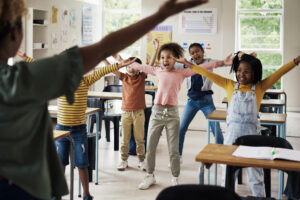
By incorporating movement into your classroom, you can unlock a door to higher engagement. When students move and are inspired to be present physically, they have the strength and energy to clear their minds and focus mentally. As a result, they become more excited and curious about learning.
Fortunately, many of us are already on the right track, starting off the day with emotion check-ins, mood meters, and mindful activities. Brain breaks are fun but are often simply a physical outlet, devoid of a connection to the mind. We can do so much more with that time if we combine these efforts, supporting the mind and body simultaneously. You can use simple movements at any time of day to bridge the mind-body gap and help students stay present, access learning, and unlock potential.
Continue to read full article (“The Modern Student Needs Movement”) from The Kennedy Center